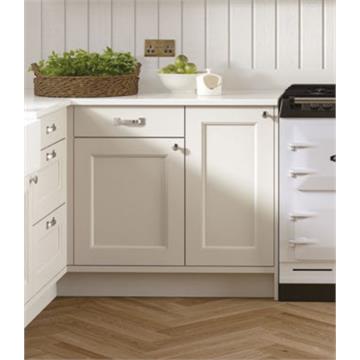
Filler panels and end panels are both flat sheets of board used to finish off a kitchen, but they do two different jobs. In short: an end panel covers an exposed side of a cabinet, while a filler panel bridges a gap — for example where a run meets a wall or where units sit next to an appliance.
End panels
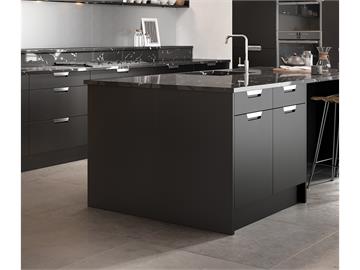
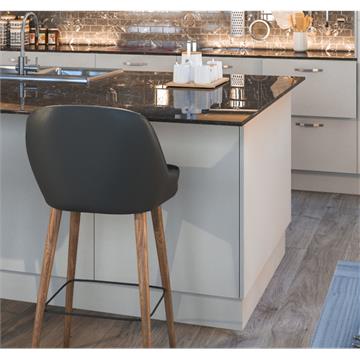
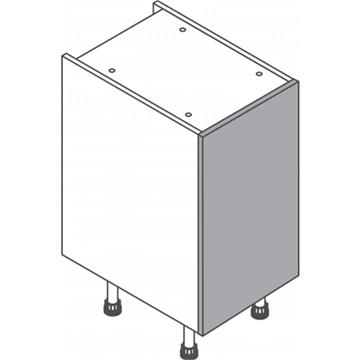
An end panel is fitted to the exposed side of a base, wall or tall unit where a cabinet is on view rather than butted against another unit — typically at the end of a run or on the side of an island. Standard carcass sides are a functional finish, so an end panel in a colour matched to your doors gives a clean, high-quality look and protects the cabinet side from knocks and moisture.
Filler panels
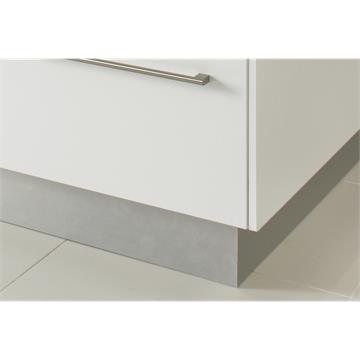
A filler panel (sometimes called an infill) fills an awkward gap that a standard unit will not cover. Common uses include closing the space where a run of units meets a wall, allowing doors and drawers room to open into a corner, and neatly bridging the gap between a cabinet and a freestanding appliance such as a fridge or cooker. Fillers are cut down to the exact width needed on site.
Which do you need?
- Covering a visible cabinet side — use an end panel.
- Filling a gap at a wall or beside an appliance — use a filler panel.
Both are supplied in finishes to match your doors so the whole kitchen ties together seamlessly.
Unsure what your layout needs? Call 02920 007 948 or email info@flatpackkitchens.co.uk, or browse our kitchen cabinets.